Should You Repair or Replace Your Sewer Line?
Repair your sewer line when damage is isolated to one section, the pipe material is still structurally sound, and the line is under 30 years old. Replace it when the pipe is old clay or Orangeburg, damage spans multiple sections, or you’ve repaired the same stretch more than once. The only way to confirm which applies is a sewer camera inspection — everything else is guesswork.
How do you know if your sewer line needs attention? {#signs}
Q: What are the warning signs of a damaged sewer line?
A: The most reliable signals are:
- Multiple drains backing up at the same time (main line problem, not a branch)
- Sewage odor in the yard or basement without visible overflow
- Soft, wet patches or unusually lush/dark grass in a line across the yard
- Gurgling sounds from toilets after running a sink
- Chronic slow drains that don’t respond to clearing
- Pest activity near the foundation (rodents enter through cracks)
When more than one of these appears together, the issue is almost always in the main sewer line — not an individual drain. A sewer camera inspection in Lancaster, OH is the diagnostic step that tells you exactly what you’re dealing with before any money is spent on repair or replacement.
When is sewer line repair the right call? {#repair}
Q: Under what conditions should I repair rather than replace my sewer line?
A: Repair makes sense when:
- Damage is isolated — a single cracked joint, a short root-intruded section, or one offset. If a camera shows 4 feet of damage in a 60-foot line, replacing all 60 feet isn’t necessary.
- The surrounding pipe is structurally intact — PVC and modern plastic pipe with one problem point and otherwise clean walls is a strong repair candidate.
- The pipe is under 25–30 years old — newer lines haven’t reached end-of-life and typically don’t have the cascading failure patterns that make replacement more cost-effective.
- The issue is buildup, not structural damage — grease accumulation, light root intrusion that hasn’t cracked the pipe wall, or scale are addressed through main line cleaning, not repair or replacement.
- Budget is a hard constraint right now — a targeted repair buys time when cash flow is tight, as long as you understand it may not be the last dollar spent on that line.
When does sewer line replacement make more sense? {#replacement}
Q: When is full sewer line replacement the better investment?
A: Replacement becomes the right call when:
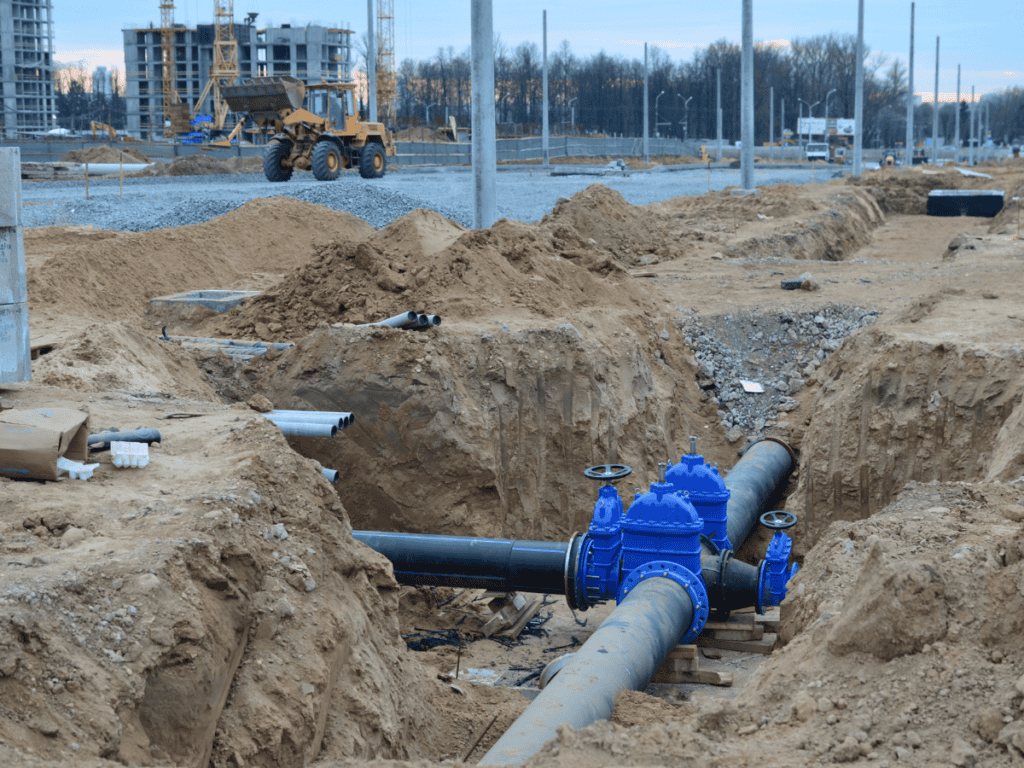
- The pipe is clay tile or Orangeburg — Lancaster and Chillicothe have significant housing stock from the 1940s–1970s, much of it with original clay or Orangeburg sewer lines. Clay cracks as ground shifts. Orangeburg (a paper-pitch composite) deteriorates into a soft tube over time. Repairing these materials reliably buys months, not years.
- Multiple problem sections exist — if a camera shows damage at three different points along the line, you’re not doing one repair; you’re doing three. At that point, a single full replacement is usually more cost-effective and delivers a new pipe with a long warranty.
- Root intrusion is widespread — silver maple and willow roots, common throughout Central Ohio neighborhoods, can colonize long sections of pipe once they find a crack. Repair doesn’t remove the root system. A properly routed replacement line with root-resistant joints solves the problem rather than managing it.
- There’s significant offset or collapse — pipe lining (trenchless repair) requires a structurally sound host pipe to adhere to. A fully collapsed or severely offset section can only be replaced.
- You’ve repaired the same section multiple times — recurring backups in the same location after professional cleaning and repair signal end-of-life pipe. Recurring repair costs add up toward replacement costs quickly.
For Lancaster-area homeowners: Lancaster, OH se
wer repair & replacement services → For Chillicothe-area homeowners: Chillicothe, OH sewer repair & replacement services →
What does sewer line repair vs. replacement cost in Central Ohio? {#cost}
Q: How much does sewer line repair vs. replacement cost in Lancaster or Chillicothe, OH?
A: Costs vary by pipe length, depth, material, and access complexity, but Central Ohio ranges are approximately:
| Service | Typical Range |
|---|---|
| Main line cleaning | $150 – $400 |
| Sewer camera inspection | $150 – $300 |
| Spot repair (single section) | $800 – $2,500 |
| Pipe lining / trenchless repair | $4,000 – $10,000+ |
| Full sewer line replacement | $6,000 – $15,000+ |
The camera inspection is always the first investment — it prevents paying for the wrong scope of work. See how much a sewer camera inspection costs in Ohio for a full breakdown.
Check current specials for inspection and repair promotions, and ask about senior discounts if applicable.
What pipe materials are common in Lancaster & Chillicothe homes?
Q: What type of sewer pipe do older Central Ohio homes typically have?
A: Material matters significantly for the repair-vs-replace decision:
- Clay tile — Standard through the 1960s. Durable when intact, but joints crack as soil shifts. Very common in both Lancaster and Chillicothe’s older neighborhoods. When clay starts failing, it usually fails in multiple places.
- Orangeburg — Used from the 1940s through early 1970s as a cost-saving substitute. Made from layers of wood pulp and pitch. It softens and deforms over time. No reliable repair method exists — replacement is the only option.
- Cast iron — Common in mid-century homes for interior drain lines. Corrodes internally over decades. Repair is sometimes viable for short sections; widespread corrosion requires replacement.
- PVC / ABS — Standard from the 1980s onward. Long service life, cleanable, and repairable. Most problems in PVC lines are isolated and don’t require full replacement.
If you don’t know what your line is made of, that’s one of the first things a camera inspection tells you.
What is trenchless sewer repair and does it apply here? {#trenchless}
Q: Is trenchless sewer repair an option in Lancaster or Chillicothe?
A: Trenchless methods — pipe lining (CIPP) and pipe bursting — are available in Central Ohio and avoid the disruption of open excavation. Whether they apply to your situation depends on:
- Pipe condition — lining requires the existing pipe to have enough structural integrity to act as a form. Collapsed sections can’t be lined.
- Line configuration — tight bends and certain access point layouts may not accommodate trenchless equipment.
- Pipe diameter and material — most residential lines qualify; some older clay configurations don’t.
When trenchless is viable, it typically preserves landscaping, driveways, and hardscaping that traditional excavation would require cutting through. When it’s not viable, traditional excavation gives full access and complete visibility into the condition of the trench and surrounding soil.
A reputable plumber will tell you which method applies to your specific line and why — and show you the camera footage that supports that recommendation.
What happens if you ignore a damaged sewer line? {#ignore}
Q: What are the risks of delaying sewer line repair or replacement?
A: A slow-developing problem becomes an emergency quickly once conditions shift. Consequences of delay include:
- Sewage backup into the home, requiring professional remediation in addition to line repair
- Soil erosion and foundation destabilization around the collapsed pipe
- Health hazards from sewage exposure in living spaces
- Higher total costs — a repair that costs $1,500 today may become a $12,000 emergency replacement after a full collapse
If you’re already at backup stage, emergency sewer repair is available for situations that can’t wait. But the most expensive scenario is always the one where the decision gets made by an emergency rather than by you.
Repair when:
- Damage is limited to one or two sections
- Pipe material is PVC or other modern plastic
- Line is under 25–30 years old
- Problem is buildup, not structural failure
Replace when:
- Pipe is clay tile or Orangeburg
- Multiple damaged sections found on camera
- Widespread root intrusion
- Pipe is collapsed or severely offset
- You’ve repaired the same section more than once
Always do first:
- Sewer camera inspection — it’s the only diagnostic that removes the guesswork
Drain Bros serves Lancaster, Chillicothe, Circleville, and communities across Central Ohio. Request a free estimate →
Related articles: