A sewer line backup is most often caused by tree root intrusion, grease and fat buildup, flushed non-degradable items, aging or collapsed pipes, and heavy rain overwhelming the system. The right fix depends on the cause: minor clogs clear with professional drain cleaning, while root-filled or cracked pipes usually need a sewer camera inspection to pinpoint the problem before any repair.
What are the most common causes of a sewer line backup?
Most residential sewer backups trace back to one of seven causes. Some build up slowly over years, while others strike suddenly after a storm. Here is the short list before we break each one down:
| Cause | Tell-tale sign |
|---|---|
| Tree root intrusion | Recurring slow drains; gurgling toilets |
| Grease, fat & oil (FOG) buildup | Kitchen-side clogs; foul odors |
| Flushed wipes & non-degradable items | Sudden full backup after flushing |
| Aging, cracked or collapsed pipe | Multiple fixtures back up at once |
| Bellied (sagging) pipe section | Repeat clogs in the same spot |
| Heavy rain / stormwater infiltration | Backups during or after storms |
| City main line blockage | Backups affecting the whole street/neighborhood |
Can tree roots really cause a sewer line backup?
Yes — tree roots are one of the leading causes of sewer backups in older Ohio neighborhoods. Roots are drawn to the warm, nutrient-rich water vapor escaping from tiny cracks or loose pipe joints. Once a hair-thin root finds its way in, it grows into a dense, net-like mass that snags toilet paper and waste until flow slows to a trickle.
Mature trees on or near a property line are the usual culprits, and the damage often happens silently over several seasons. We break down the warning signs and removal options in our guide to tree roots in your sewer line. If you have large trees and a home built before the 1980s, this should be your first suspect.
Does grease cause sewer line backups?
Grease is the single most common cause of sewer blockages. According to figures reported by the EPA, fats, oils, and grease account for roughly 47% of reported sewer system blockages (Clemson Cooperative Extension). Liquid grease looks harmless going down a hot sink, but it cools and hardens like candle wax inside your pipes, narrowing them until waste can no longer pass.
To keep fats, oils, and grease out of your line:
- Pour cooled grease into a sealable container and throw it in the trash — never down the drain.
- Wipe greasy pans with a paper towel before washing.
- Avoid relying on the garbage disposal for food scraps and oily waste.
What everyday items cause sewer backups?
Many “flushable” products are anything but. Items that do not break down the way toilet paper does are a frequent cause of sudden, complete backups. The worst offenders include:
- “Flushable” wipes — they stay intact and snag on roots and rough pipe joints.
- Paper towels, tissues & napkins — far more absorbent and slower to dissolve than toilet paper.
- Feminine hygiene products & cotton swabs — they swell and clump together.
- “Fatbergs” — when wipes bind with grease, they form solid masses that block the line entirely.
Rule of thumb: only the three P’s belong in a toilet — pee, poop, and (toilet) paper.
Can old or damaged pipes cause backups?
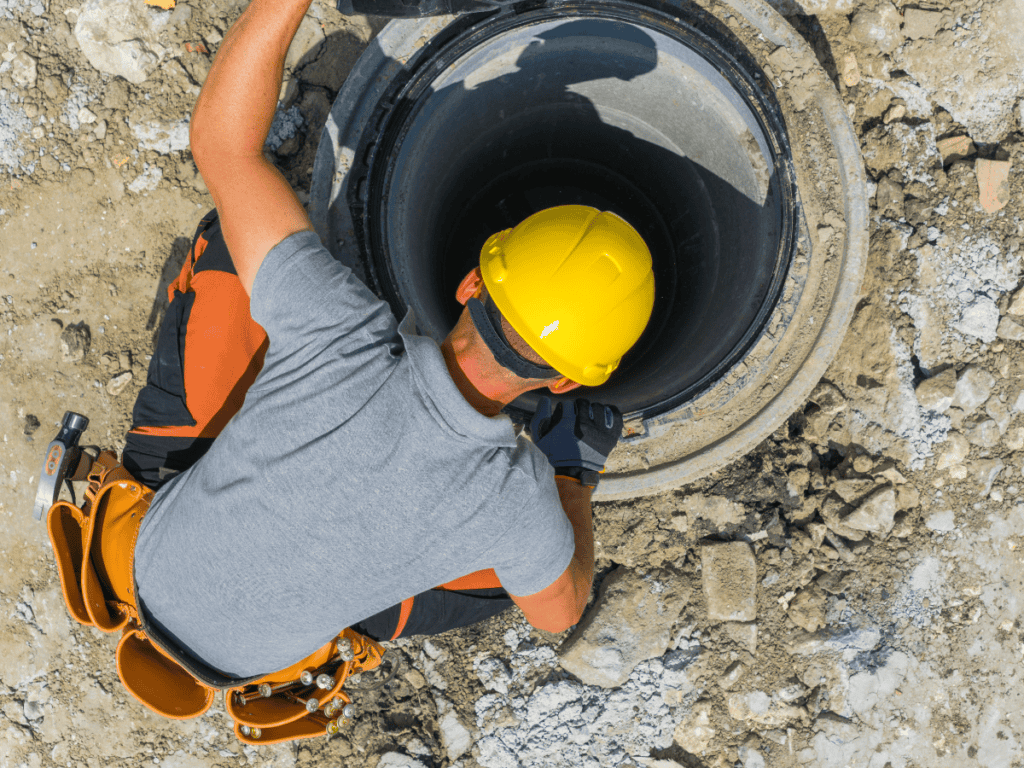
Absolutely — and this is a big one in Central Ohio. Many homes around Lancaster and Fairfield County were built decades ago with clay, cast iron, or Orangeburg (tar-paper) sewer pipe. These materials crack, corrode, and collapse with age, creating snag points and partial blockages.
Two age-related problems show up most often:
- Cracked or collapsed pipe — shifting soil, freeze-thaw cycles, and corrosion break the pipe apart, letting soil and roots intrude.
- Bellied (sagging) pipe — a section settles lower than the rest of the run, so water and waste pool there and clog repeatedly in the same spot.
If your home keeps backing up in the same place despite cleaning, an aging or damaged pipe is the likely reason — and that calls for a camera inspection to confirm before deciding on repair.
How does heavy Ohio rain cause sewage to back up?
During heavy rain or rapid snowmelt, stormwater can seep into sanitary sewer lines through cracks, loose joints, and improperly connected sump pumps or downspouts — a process called inflow and infiltration. The extra water overwhelms the system’s capacity and pushes sewage back toward homes, often through basement floor drains. The EPA lists these inappropriate connections and blockages among the primary triggers of sanitary sewer overflows (US EPA).
If your backups consistently happen during or right after storms, the cause is more likely stormwater infiltration than a simple clog — and a backwater valve may be worth discussing.
Is a sewer backup my responsibility or the city’s?
It depends on where the blockage sits. Your sewer lateral — the pipe running from your home to the city main, usually under your yard — is the homeowner’s responsibility. The municipal main line in the street belongs to the city or local utility.
A quick way to tell them apart: if only your home is affected, the problem is almost always on your lateral. If neighbors up and down the street are backing up too, the blockage is probably in the city main and should be reported to your local utility right away.
How do you fix a sewer line backup?
Fixing a backup is a two-step process: diagnose first, then treat the actual cause. Guessing wastes money and lets the real problem come back.
- Diagnose with a camera. A waterproof camera is fed down the line to show exactly what and where the problem is — roots, grease, a crack, or a belly.
- Clear the blockage. For grease, roots, and debris, professional main line cleaning with a mechanical auger or high-pressure hydro-jetting cuts through the clog and scours the pipe walls.
- Repair or replace if needed. When the camera reveals cracked, collapsed, or bellied pipe, cleaning alone won’t hold. Sewer line repair — including trenchless options that avoid digging up the whole yard — restores proper flow for the long term.
How can Ohio homeowners prevent sewer backups?
Most backups are preventable with a few simple habits and routine maintenance:
- Keep fats, oils, and grease out of every drain.
- Flush only toilet paper — skip the “flushable” wipes.
- Schedule a camera inspection every 1–2 years if you have mature trees or an older home.
- Have the main line professionally cleaned before small clogs become full backups.
- Consider a backwater valve if storms regularly cause basement backups.
- Make sure downspouts and sump pumps drain away from — not into — the sewer line.
What should I do during a sewer backup emergency?
A sewage backup is a health hazard, so act fast:
- Stop running water and avoid flushing toilets — every gallon makes it worse.
- Keep people and pets away from the affected area; raw sewage carries harmful bacteria.
- Shut off electricity to the affected area if water is near outlets or appliances.
- Call a professional immediately. 24/7 emergency sewer service gets the line cleared and the mess contained before it damages your home.
Backed-up sewer line in Lancaster or Central Ohio?
Don’t wait for a small clog to flood your home. Our licensed team diagnoses the real cause with a camera and fixes it right the first time. Get fast, reliable sewer repair in Lancaster, OH — call Drain Bros today for a free estimate.
Conclusion / TL;DR
Sewer line backups come down to a handful of repeat offenders:
- Tree roots infiltrating cracks and joints.
- Grease (FOG) hardening inside the pipe — the #1 blockage cause.
- Flushed wipes and non-degradable items forming clogs and fatbergs.
- Aging, cracked, or bellied pipes common in older Central Ohio homes.
- Heavy rain and stormwater infiltration overwhelming the system.
- City main blockages affecting a whole street.
The fix always starts with a camera inspection to find the true cause, followed by professional cleaning or — for damaged pipe — targeted repair. When in doubt, or during an active backup, call a licensed pro right away.
About the author
The Drain Bros Team — Drain Bros is a licensed plumbing and excavation company serving Lancaster and Central Ohio, specializing in sewer line repair, camera inspection, drain cleaning, and 24/7 emergency service. This article reflects field experience diagnosing and clearing sewer backups across Fairfield County homes.